
Overview
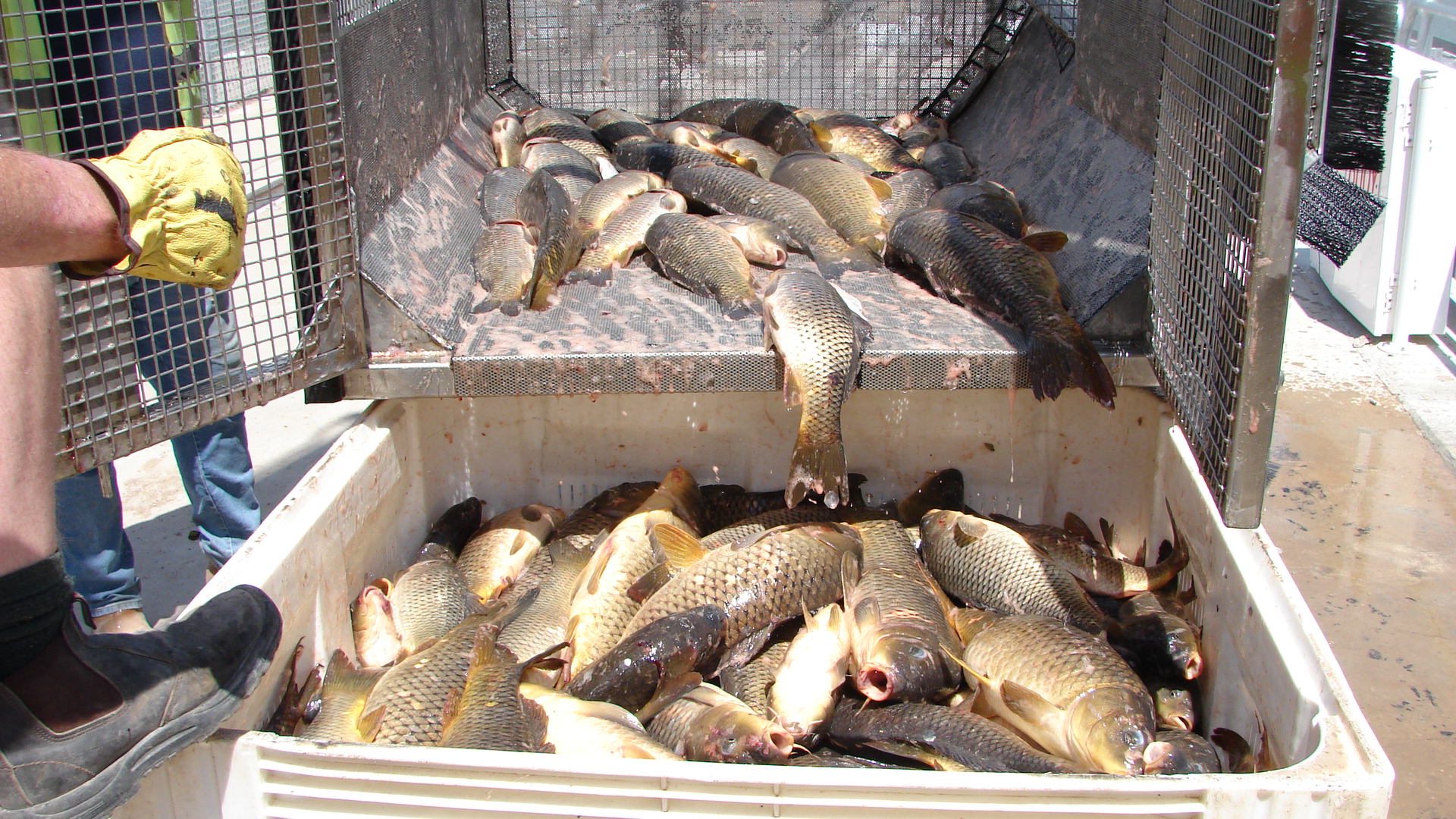
Carp are highly mobile and their movements through river systems are not random. Carp respond to seasonal and hydrological cues, move between rivers and connected floodplains and can concentrate at dams and fishways as they attempt to move.
Fish movement creates opportunities for targeted control. Rather than distributing removal effort broadly across a river or wetland, managers can identify locations where carp predictably concentrate and use their behaviour to improve the efficiency and selectivity of removal.
One of the clearest Australian examples is the Williams' carp separation cage. Long-term operation of a cage at Lock 1 fishway on the lower Murray River demonstrated that very large numbers of adult carp could be removed while allowing native fishes to continue.
Case study: the Williams' carp separation cage
.jpg)
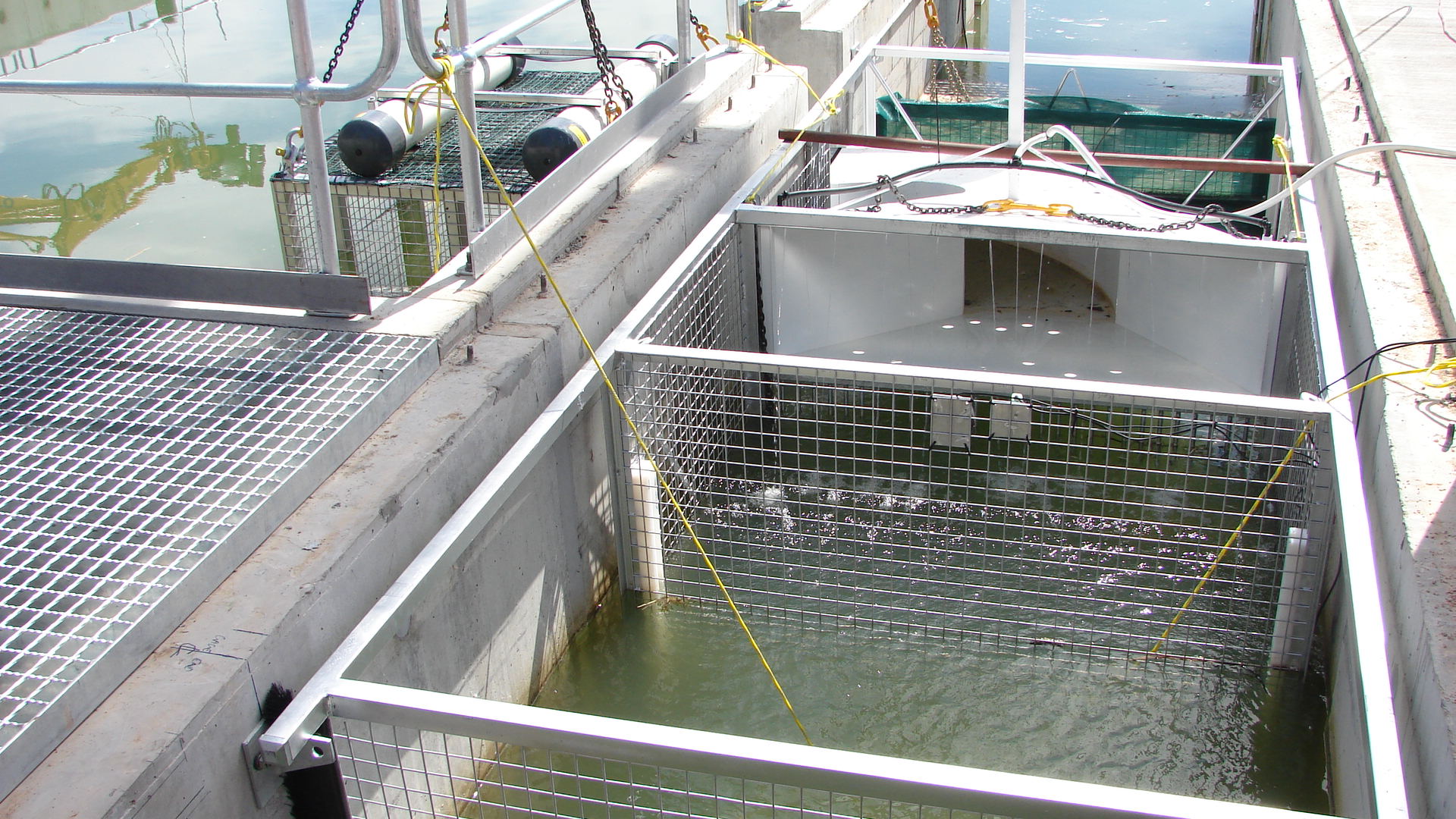
The Williams' carp separation cage was developed to exploit a behavioural difference between carp and many Australian native fishes.
When moving through a fishway, carp confined within the separation cage jump over a low barrier into a separate holding compartment for removal and commercial processing. Native fishes continue through the fishway — turning the fishway itself into an opportunity for highly selective invasive-fish control.
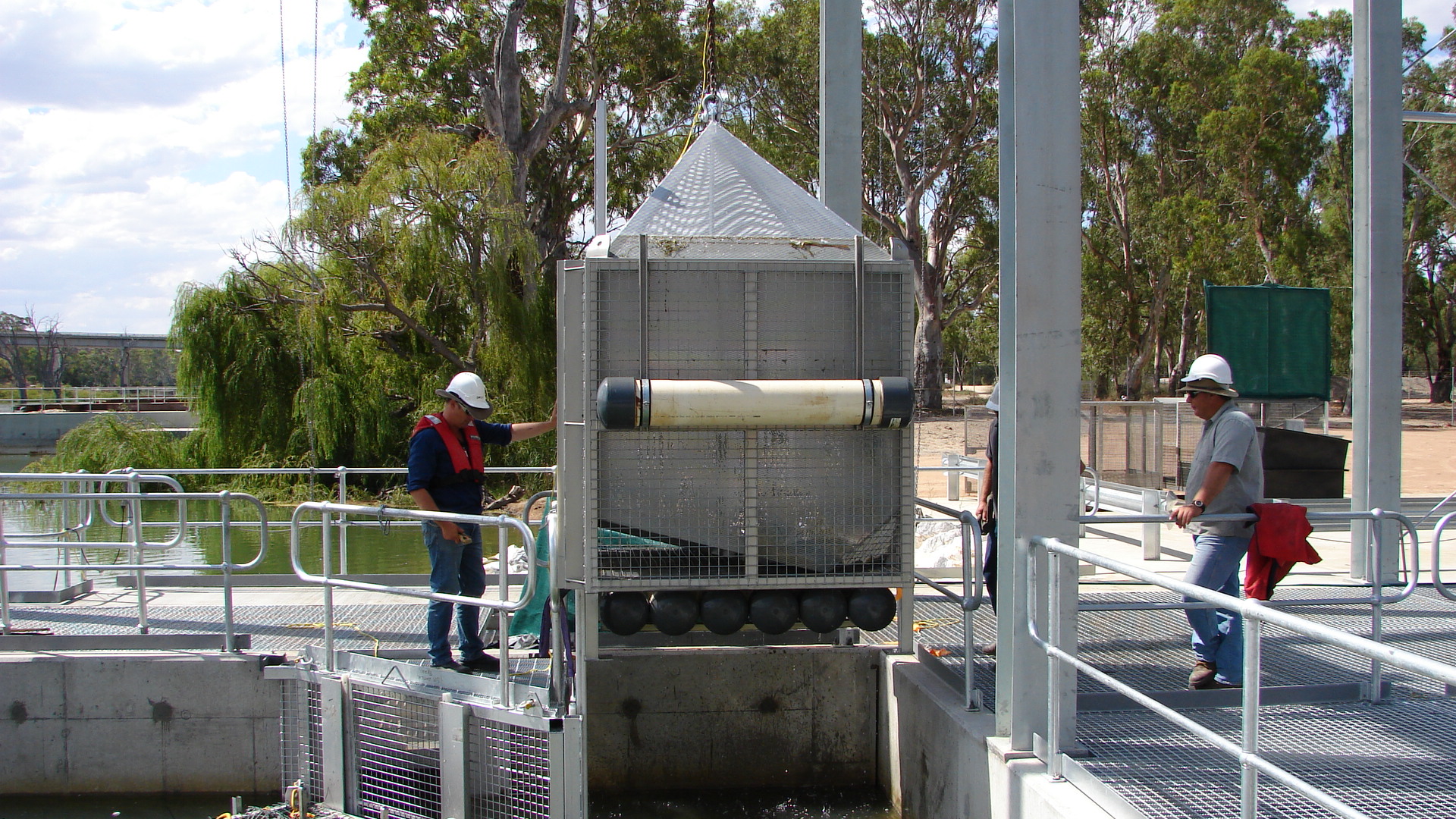
The Williams' cage has been operating at Lock 1 since 2007. Over that time it has removed approximately 1,000 tonnes of carp — around 830,000 fish, assuming an average weight of 1.2 kg — with maximum daily catches of roughly 5 tonnes. Native-fish bycatch has remained remarkably low, at around 0.03%.
The Lock 1 project also demonstrated the importance of collaboration. Successful long-term operation involved researchers, river managers, weir operators and commercial fishers — not simply installation of the trapping technology.
What did we learn?
The Lock 1 experience demonstrated that carp behaviour can be exploited to achieve large and highly selective removals at suitable river infrastructure. Three lessons stand out.
1. Location matters. Carp control becomes much more efficient when it targets places where fish naturally concentrate or where their movements are constrained by river infrastructure.
2. Selectivity matters. Removal of an invasive fish should not unnecessarily restrict the movement or increase the mortality of native fishes. The very low native-fish bycatch at Lock 1 demonstrates the potential advantage of behaviourally selective trapping.
3. Removal isn't the same as suppression. Removing large numbers of carp from a site doesn't necessarily suppress the wider carp population. Population-level outcomes depend on the number removed relative to the population, immigration, recruitment and the scale over which control occurs — so monitoring needs to track not just catches, but whether sustained removal produces the intended ecological or population response.
Building on the Lock 1 experience
Research has since expanded beyond the Williams' cage to examine carp abundance, movement, recruitment and responses to natural and managed flows across the Murray–Darling Basin.
Recent work has produced improved estimates of carp biomass and the first quantitative estimates of their ecological impacts, including:
- 36% reduction in aquatic plants
- 31% reduction in aquatic macroinvertebrates
- 63% increase in water turbidity
- Smaller increases in nutrients and plankton
This work creates an opportunity to move from individual trapping sites towards a more systematic approach to behaviourally targeted control, with demonstration of ecosystem benefits.
Potential intervention sites include fishways and other river infrastructure where carp movements are concentrated or predictable. Suitability will depend on local hydrology and infrastructure, carp abundance and behaviour, protection of native fish passage, operational feasibility and viable pathways for using or disposing of captured biomass.
River operations are also relevant, since natural and managed flows influence carp movement, recruitment and access to floodplain and wetland habitats. Understanding these relationships can help managers identify periods of increased vulnerability to control — while recognising that environmental-water decisions must balance multiple ecological objectives.
Where does targeted removal fit?
Targeted removal is not a stand-alone solution to carp across the Murray–Darling Basin. Its value lies in exploiting predictable vulnerabilities in carp behaviour to achieve highly selective removal at suitable locations, as one component of broader integrated carp management.
The next opportunity isn't simply to install more Williams' cages — it's to use what's been learned from Lock 1 and subsequent research to identify where behaviourally targeted control is most likely to make a meaningful contribution. This could include:
- Identifying priority movement bottlenecks and infrastructure where carp predictably concentrate
- Assessing whether Williams' cages, automated systems or other selective removal technologies are appropriate at those locations
- Integrating information on carp movement and recruitment with river and wetland management
- Designing monitoring that measures carp removal, native-fish bycatch and population or ecological responses
- Establishing practical arrangements for handling, processing, using or disposing of captured carp biomass
More information
- Dr Ivor Stuart, Gulbali Institute, Charles Sturt University
- Stuart, I.G. and Conallin, A.J., 2018. Control of Globally Invasive Common Carp: An 11‐Year Commercial Trial of the Williams’ Cage. North American Journal of Fisheries Management, 38(5), pp.1160-1169.
- Stuart, I.G., Fanson, B.G., Lyon, J.P., Stocks, J., Brooks, S., Norris, A., Thwaites, L., Beitzel, M., Hutchison, M., Ye, Q. and Koehn, J.D., 2021. Continental threat: How many common carp (Cyprinus carpio) are there in Australia?. Biological Conservation, 254, p.108942.
- Fanson, B.G., Hale, R., Thiem, J.D., Lyon, J.P., Koehn, J.D., Bennett, A.F. and Stuart, I., 2024. Assessing impacts of a notorious invader (common carp Cyprinus carpio) on Australia's aquatic ecosystems: Coupling abundance-impact relationships with a spatial biomass model. Biological Conservation, 290, p.110420.
- Charles Sturt University research on aquatic biosecurity and carp management.
"Carp movement behaviour creates predictable opportunities for control. The challenge is to identify where fish concentrate, then design selective removal around those locations without compromising native fish passage."