
Overview
Teal Flat wetland in South Australia’s Mid Murray offers a powerful example of what is possible when European carp are excluded from a river-connected wetland.
The lagoon has been restored by temporarily closing it off from the Murray River, allowing it to dry through evaporation so carp are removed, and then refilling it with river water through carp screens. The result is a clear-water wetland with dense aquatic vegetation and renewed habitat for native fish, birds, frogs and turtles.
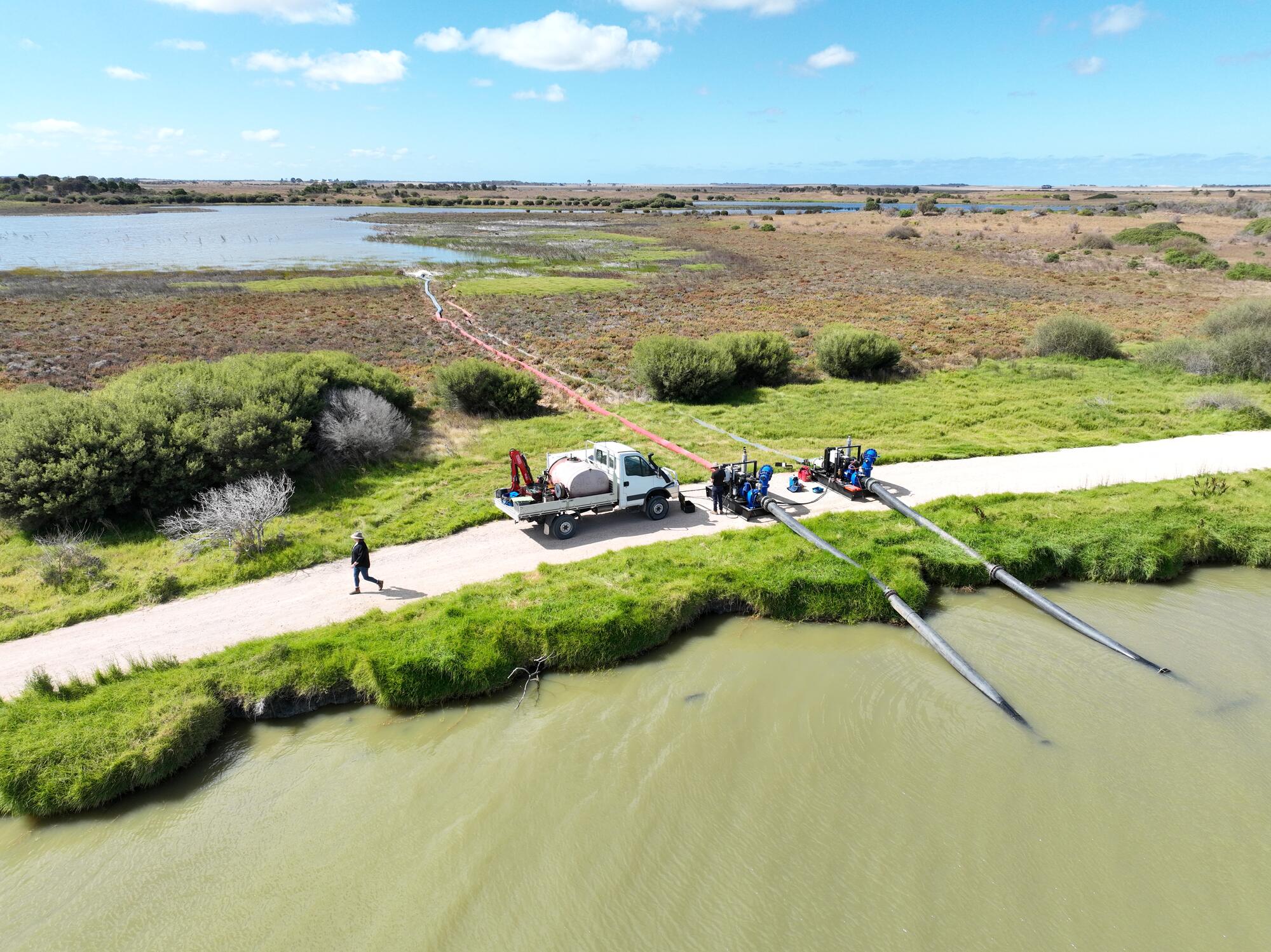
Teal Flat demonstrates that targeted wetland management can make a visible difference at local scale. With tens of thousands of wetlands across the Basin, this kind of practical carp management shows how pest control can be directly linked to clearer water, stronger aquatic plant communities and improved habitat for native wildlife.
Who is involved?
Teal Flat Lagoon is one of 25 pool-connected wetland sites managed by Landscapes South Australia’s wetland team. The work includes on-ground monitoring and management.
The site also sits within a broader national conversation involving conservationists, fishers, fisheries managers and river communities calling for stronger carp management, while research continues into the possible future use of carp herpesvirus as a biological control tool.
Actions being taken
At Teal Flat, managers are using wetland drying, reconnection and carp exclusion as the core management approach. Temporarily closing the wetland to the Murray River and allowing it to dry removes carp from the system.

When the wetland is refilled, carp screens help stop carp re-entering. This creates conditions where aquatic plants can re-establish, water clarity can improve and native wildlife can return.
.jpg)
There are five steps:
- Close selected wetlands to the river when conditions allow.
- Allow wetlands to dry down through evaporation to remove carp from the system.
- Refill wetlands with river water once carp have been removed.
- Use carp screens or exclusion structures to reduce the risk of reinvasion.
- Monitor changes in water clarity, aquatic vegetation and native wildlife response.
Outcomes
A blueprint for restoration:
Teal Flat is a blueprint for environmental restoration through carp management. Clear water and rich aquatic vegetation have returned, including plants such as ribbon weed and red water milfoil.
Wildlife responding:
This habitat is supporting a wider range of native life, including fish, birds, frogs and turtles.
A model for other sites:
The site provides a practical demonstration of how carp exclusion can help wetlands recover, and offers a model that could be assessed for other suitable wetlands across the Murray-Darling Basin.

Teal Flat shows that carp control works when it is linked to wetland management and ecological recovery. Removing carp is only one part of the story.
The real value comes from restoring the conditions that allow aquatic plants and native animals to thrive.
The project also reinforces that practical carp management can start now, even while national research into biological control continues. A carp virus may still be years away, but wetlands do not have to wait for action.
“Teal Flat shows that carp management is not just about removing a pest fish. It is about giving wetlands the chance to recover their natural structure, clarity and life.“